How To Organize Transportation For Bridal Party And Guests

You’re likely feeling a mix of excitement and overwhelm right now — juggling timelines, dresses, and a dozen tiny details that all matter. The joy is real, but so is the chaos. I’ve seen it while filming hundreds of weddings — the soft morning light spilling across the bridal suite, the laughter that turns into last‑minute problem solving, the gentle calm before the ceremony begins. The secret to keeping that joyful calm alive is organizing transportation early and clearly for your bridal party and guests.

When you know everyone can get where they need to be on time, you create space for what truly matters — connection, presence, celebration. Whether you’re picturing sleek limos for your wedding party or simple shuttles for guests, planning transport isn’t just about convenience; it’s about keeping the day flowing smoothly so no one misses a moment. Well‑timed, reliable rides take stress off your plate and set the right tone from the start.
In the following sections, you’ll learn how to assess who needs transportation, choose the right vehicles, budget smartly, and handle all the logistics with confidence. By the end, you’ll have a straightforward plan that keeps your celebration moving effortlessly — and your focus where it belongs: on the joy of saying “I do.”
Assessing Transportation Needs for Bridal Party and Guests
Accurate planning for wedding day transportation depends on knowing who needs rides, how far they must travel, and how each trip fits into the event timeline. Understanding these details helps you create a schedule that keeps your bridal party and guests on time and relaxed from start to finish.
Determining Who Requires Transportation
Identify the groups that need transportation before booking any vehicles. Most couples arrange rides for the bridal party, immediate family, and elderly relatives. Many also include out‑of‑town guests or anyone staying at designated hotels.
Make a simple table to stay organized:
| Group | Pickup Point | Destination | Notes |
|---|---|---|---|
| Bridal Party | Hotel | Ceremony | Arrive 45 min early |
| Parents | Home | Ceremony | Assist with seating |
| Guests (Out‑of‑Town) | Hotel Shuttle | Reception | Two trip times |
Consider timing between the ceremony and reception. If there’s travel between venues, shuttles reduce stress and help everyone arrive together. For guidance, see how The Knot explains common wedding guest transportation groups.
I learned this the hard way filming a summer wedding that ran behind by twenty minutes because the groom’s grandparents had no ride from the hotel. I watched the coordinator scramble to call a backup van. The moment they finally arrived, everyone cheered. That day reminded me that no guest is too few to plan for when finalizing your vehicle list.
Guest List Analysis and Special Considerations
Once you know who needs a ride, review your guest list with special attention to travel limitations. Factor in mobility issues, large families, or guests unfamiliar with the area. Providing clear instructions and shuttle times helps avoid confusion.
List your priorities:
- Accessibility: Reserve vehicles that can accommodate wheelchairs or walkers.
- Comfort: Ensure enough seats for extended family groups.
- Clarity: Share pickup points in invitations or hotel packets.
For helpful coordination advice, look at this wedding shuttle checklist that focuses on timing and scheduling.
As a cinematographer, I once filmed a mountain resort wedding where half the guests missed the shuttle. Cell service dropped, and the bride waited nervously as staff rushed to fetch them. When the final bus arrived at sunset, she laughed in relief. That moment showed how clear communication beats scenic confusion every time.
Venue Location and Logistics
The distance between your wedding venues affects how many vehicles to book and how early they must depart. Rural or multi‑stop setups may require separate transport for vendors, family, and guests. A single‑site venue often simplifies things, but even then, shuttle loops between hotels and the venue are useful.
Create a quick checklist:
- Calculate average travel time plus a 15–20 minute buffer.
- Map routes and backups in case of traffic.
- Arrange return rides for late‑night departures.
According to Brides.com’s overview of wedding transportation planning, early coordination prevents timing conflicts during transitions.
I learned this during a rainy urban wedding when traffic stalled every taxi around the downtown ceremony. The bride’s car sat stuck three blocks away while guests waited. After that shoot, I started suggesting couples schedule earlier departures and dedicated vehicles rather than counting on local transport. It keeps the day steady and calm.
Selecting Transportation Options

Choosing the right mix of wedding transport keeps your event on schedule and comfortable for everyone. Professional car services, group shuttles, and themed vehicles each serve different needs, from getting the bridal party to the venue to helping guests travel safely between locations.
Limousines and Stretch Limos
A limo or stretch limo gives a private, elegant space for you and your wedding party to travel together. These vehicles work best for small groups such as the couple, parents, or bridesmaids. Most wedding transportation services offer flexible booking periods so you can use the limo for both arrival and your getaway.
Choose a provider with a clean maintenance record and a reputation for punctuality. Ask about amenities like chilled water, privacy dividers, and music systems. If you plan multiple pick‑ups, confirm how they charge for waiting time or added stops.
Tip: Book your limo three to six months in advance to secure your desired model—especially during wedding season. Some couples coordinate color themes with white or silver vehicles for a clean look in photos.
For more detailed planning on car rentals and guest timing, The Knot’s wedding transportation guide offers helpful insights into when to reserve specific vehicle types.
Party Buses and Shuttle Services
Party buses, shuttle buses, or sprinter vans are ideal when you need to move larger groups between the ceremony and reception. A wedding shuttle keeps everyone together and prevents parking issues at busy venues. Most services charge by the hour or a flat route fee.
When selecting a shuttle service, confirm seating capacity, air‑conditioning, and storage for personal items. A coach bus works well for long distances, while smaller vans suit short city routes. Consider accessibility for older guests and make sure the driver knows every stop in advance.
I learned this while filming a large wedding where a delayed party bus caused relatives to miss the cocktail hour. Watching the couple’s stress made it clear that clear communication with the transport company is crucial. Since then, I always remind couples to get written confirmation of pickup times and backup contacts for the driver.
You can explore sample pricing and group planning tools in this complete wedding transportation guide.
Rideshare and Town Cars
Rideshare services like Uber and Lyft are useful for flexible guest travel, especially after receptions. They’re reliable for small parties leaving at different times. Couples often cover ride credits for safety, ensuring guests have a dependable way home.
Town cars and sedans offer another convenient option for parents or VIP guests who prefer private travel without the formality of a limo. You can pre‑book multiple cars for various pickup points.
If you’re holding your celebration in a busy downtown area, plan pickup zones to avoid confusion and delay. Having a transportation coordinator or trusted usher outside the venue reduces wait times and directs traffic flow effectively.
These steps mirror practices shared in Zola’s wedding transportation etiquette overview, which highlights how early coordination creates a smoother guest experience.
Unique and Themed Vehicles
Couples often personalize travel with vintage cars, a golf cart, or a distinctive getaway car. A restored classic or convertible adds visual charm to your exit photos and video moments. Some even consider themed options such as trolleys, boats, or horse‑drawn carriages for outdoor or destination weddings.
When booking something unique, ask about insurance coverage, weather contingencies, and backup plans. Specialty vehicles often come with specific timing rules, so confirm how long you’ll have the car and whether it includes a driver.
This reminds me of one lakeside wedding I filmed where the couple’s vintage car broke down minutes before their send‑off. Guests quickly decorated the groom’s cousin’s pickup truck, turning a mishap into a heartfelt and funny memory. It showed how flexibility and good humor matter more than any perfect vehicle.
You can browse creative wedding transportation ideas through Joy’s list of unique transportation options for inspiration on styles that fit your theme and budget.
Budgeting and Managing Transportation Costs
Accurate planning for wedding transportation costs helps you make informed choices and avoid last-minute stress. By understanding average rates, matching options to your wedding budget, and identifying important cost factors, you can manage travel for your bridal party and guests more efficiently.
Estimating Average Transportation Expenses
Knowing the average cost of wedding transportation makes it easier to set realistic expectations. Prices vary depending on location, distance, and vehicle type. A local limousine rental for three hours might cost between $400–$600, while a shuttle bus for guests can range from $800–$1,200. Larger cities often have higher rates due to demand and parking fees.
A simple way to control expenses is to compare quotes early. Many couples find guidance from sites like The Complete Wedding Transportation Guide, which explains how larger vehicles and peak seasons can raise prices. Use an organized spreadsheet to track vendor name, vehicle type, number of passengers, and total cost per hour.
| Vehicle Type | Average Hourly Rate | Ideal For |
|---|---|---|
| Sedan/Luxury Car | $75–$100 | Couple or parents |
| Limousine | $100–$200 | Bridal party |
| Shuttle/Coach Bus | $125–$250 | Guests and large groups |
This reminds me of one wedding where I filmed a bride who underestimated transport time between the church and reception. She booked one small limo instead of two. Half the bridal party waited on the curb for nearly 30 minutes. Watching the frustration build taught me how critical proper vehicle sizing is when estimating costs.
Aligning Options with Your Wedding Budget
Setting transportation priorities helps you avoid overspending. Think about which rides matter most—such as the couple’s arrival or guest shuttles—and allocate your wedding budget accordingly. Using cost-saving strategies like shared rides, shorter rental windows, or combining pickups and drop-offs can significantly lower expenses.
Consider using planning tips from enrichest.com to help you outline your spending categories. Assign a specific percentage of your total wedding budget to transportation—typically 5–10% is reasonable for most weddings. Include a small buffer for overtime charges or last-minute adjustments.
To illustrate this, here’s a moment that taught me the value of flexibility: during one outdoor wedding I filmed, heavy rain delayed the ceremony, forcing buses to wait an extra hour. The couple hadn’t planned for overtime fees, which added several hundred dollars. Since then, I always recommend couples confirm how their contracts handle time changes.
Factors Influencing Overall Cost
Several details influence the overall wedding transportation cost. Travel distance and booking time are two major ones. Long routes, multiple pickup locations, or last-minute reservations drive prices higher. Weekend evenings and popular seasons also increase demand, raising rates.
Additional expenses may include fuel surcharges, driver tips (generally 15–20% of the bill), and parking permits. Companies that handle large groups may also charge waiting fees between trips. The Fleet Management Budget Guide notes the importance of tracking indirect costs, like vehicle cleaning or administrative fees, that often appear after final billing.
I learned this the hard way filming in a crowded downtown venue. The couple hired a vintage car for exit photos but forgot to reserve street parking. The driver circled the block for 20 minutes, adding both stress and cost. That experience reminded me that even small logistical oversights can affect the final bill.
By understanding these cost drivers and planning early, you stay in control of your transportation budget and ensure everyone arrives on time.
Coordinating Logistics and Etiquette
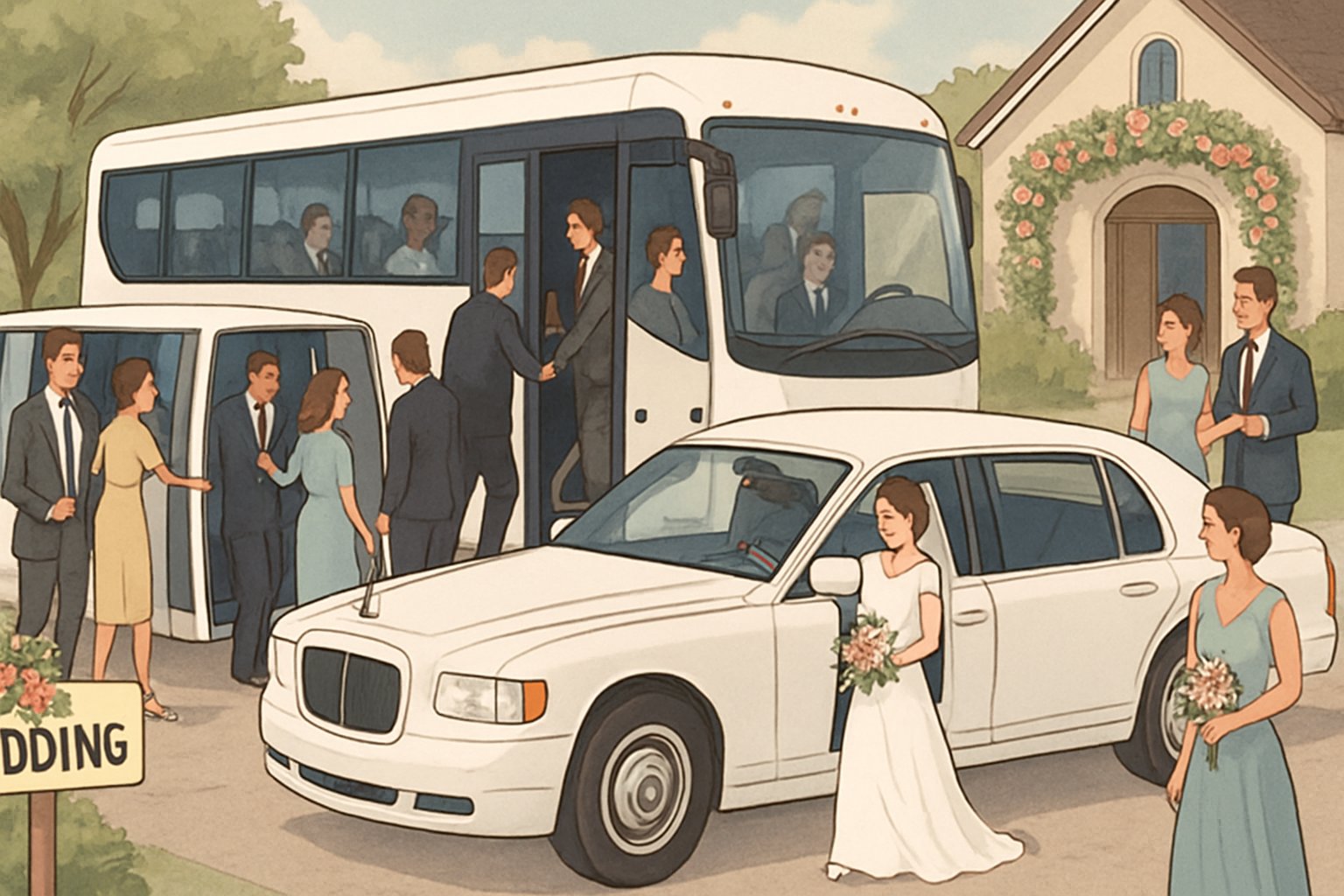
A smooth transportation plan relies on clear timing, reliable vendors, and respectful etiquette. You need to coordinate when, where, and how people travel while keeping comfort, safety, and efficiency top of mind.
Creating and Communicating the Transportation Schedule
Build your transportation schedule early and keep it updated. Note pickup and drop-off times, locations, and contact information for every shuttle or car. Include buffer time for traffic or weather delays. Couples often overlook return trips, so ensure you plan evening shuttles back to hotels.
Use tools like shared spreadsheets or wedding apps to track routes and timelines. Share the final plan with your wedding planner, bridal party, and drivers a few days before the event. If possible, print a simplified version for guests with their invitation or hotel welcome bag.
Post event-day updates through a group text or a wedding website message board. Guests appreciate knowing if a shuttle runs late or if parking directions change. For more examples of how to set up timelines and manage guest transport, review these ideas on organizing wedding transport.
Working with Transportation Vendors
Choose wedding transportation vendors who have experience with group events. They understand timing, staging locations, and the importance of flexibility. Discuss your full route plan, guest count, and luggage needs before signing a contract. Ask if they can adjust for last-minute schedule changes or handle multiple loops between venues if needed.
When comparing wedding transportation vendors by city, ask for photos of vehicles, proof of insurance, and driver details. Create a short table to keep details organized:
| Vendor | Vehicle Type | Max Capacity | Backup Plan | Contact |
|---|---|---|---|---|
| City Limousine Co. | Party Bus | 24 | Spare van on call | 555-2930 |
| Greenway Travel | Shuttle | 36 | Replacement driver | 555-3772 |
I learned this the hard way filming a wedding on a rainy September afternoon. The couple booked only two vans for eighty guests because they trusted online estimates. When traffic doubled the trip time, guests arrived late, and the ceremony started half an hour behind schedule. It taught me that tested vendors and tight communication matter more than saving a few dollars.
Wedding Transportation Etiquette and Best Practices
Good etiquette reduces confusion and sets the right tone for the day. Couples typically arrange rides for the bridal party, parents, and sometimes grandparents. Offer clear pickup instructions and confirm everyone knows their meeting point. Coordinate with your wedding planner if guests need help finding their ride.
According to The Knot’s wedding transportation guide, couples often forget how arrival timing affects photos and ceremony flow. Ask vendors to do a quick route test, especially in busy areas. Keep drivers informed about any schedule shifts to prevent delays.
I once filmed a wedding where the groom’s grandmother was accidentally left behind because her name was missing from the shuttle list. The planner quickly called a car service, and she arrived just before the vows. The relief on everyone’s faces reminded me that etiquette extends beyond formality—it’s about empathy, attention, and care for every guest’s experience.
Proper etiquette and organization ensure people move easily between each event, helping the celebration stay relaxed and joyful from start to finish.
Frequently Asked Questions
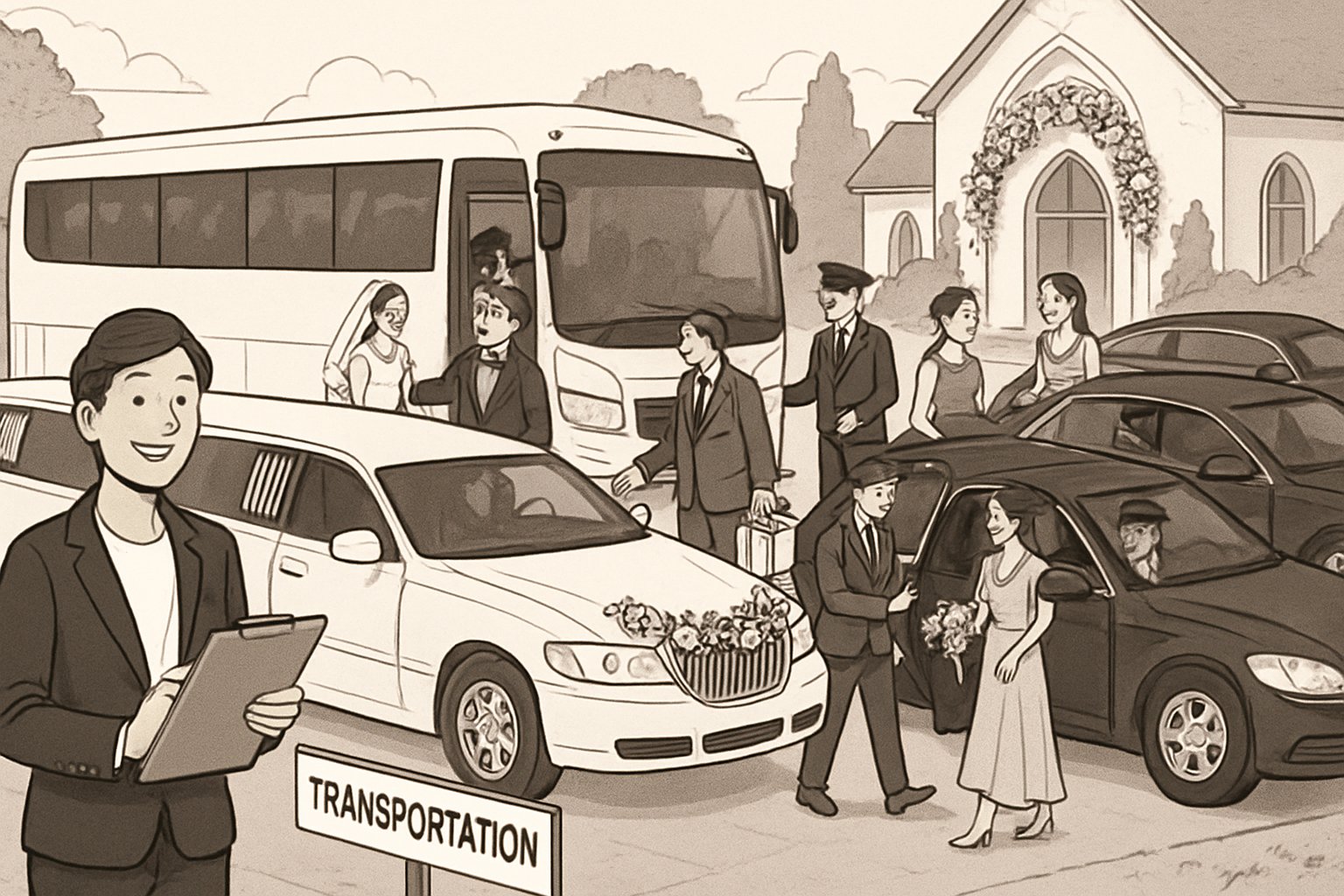
Planning transportation for your wedding guests and bridal party helps everyone arrive safely, on time, and with less stress. You’ll need to think about cost, comfort, and convenience while balancing your budget and guest experience.
What are some affordable options for transporting wedding guests?
You can save money by renting a shuttle bus, school bus, or van instead of multiple limousines. Group transportation keeps costs low because you pay by vehicle rather than per person.
Another budget option is arranging shared rides through local car services or apps. Some couples even coordinate shuttle services for larger groups traveling from the ceremony to the reception. If the venue is near hotels, walking distance or carpool plans can work well too.
How much should I budget for wedding transportation?
Transportation costs depend on location, distance, guest count, and vehicle type. National averages often range from $500 to $1,200 for a few hours of service. High-end options such as luxury limos or vintage cars can raise the total, but shorter rental times reduce the rate.
Always factor in tips for drivers and possible overtime charges. Planning early and comparing quotes can help you find a vendor that fits your budget.
What are unique transportation ideas for a wedding?
Some couples like to arrive in creative ways that match their theme. Horse-drawn carriages, classic cars, or trolleys bring charm to the experience. For outdoor venues, golf carts and boats can add character and fun.
If you’re looking for something distinctive, wedding transportation ideas and etiquette suggest choosing a vehicle that reflects your personality or setting—like a vintage bus for a rustic wedding or sleek cars for an urban celebration.
Is providing transportation for wedding guests necessary?
It’s not required, but it’s thoughtful—especially when guests stay at hotels far from the venue or if parking is limited. Providing a ride helps ensure everyone arrives safely and avoids confusion or delays.
For destination weddings or rural areas, organizing transportation for the group often prevents logistical issues. Even one shared shuttle between main stops can make a big difference in guest comfort.
Who is traditionally responsible for covering the cost of wedding party transportation?
Traditionally, the couple covers transportation for the bridal party and sometimes close family. If both families are contributing to the wedding, they may decide to split the cost of guest shuttles or limos.
Parents occasionally cover rides for their side of the family, but this varies by budget and culture. The key is clear communication before booking anything.
What is the etiquette for arranging transportation for the bride and groom?
The couple typically travels together after the ceremony, often in a car that matches their style. Many book a luxury sedan or vintage vehicle to leave the venue in comfort. It’s also common for this to serve as a quiet moment before the reception.
Some couples follow etiquette guidelines for wedding transportation that suggest assigning a reliable driver or professional service. This ensures safety, especially when celebrating continues late into the night.