Signature Drinks And Bar Planning For Beginners

The day you start planning your wedding bar probably feels like a mix of joy and “how do I even begin?” You picture soft morning light spilling across your bridal suite and the hum of excitement before your first look—but questions about signature drinks, menu options, and logistics can quickly take over. It’s completely normal to feel both thrilled and overwhelmed at this stage. You just want everything to feel seamless, elegant, and true to you.
A well-planned bar and thoughtfully crafted signature drink bring your celebration to life while keeping the experience stress-free and memorable. Whether you dream of a fun custom cocktail menu or a simple setup that fits your style, knowing how to plan it all with confidence helps every detail fall into place. Learning about flavor balance, presentation, and guest experience—like the insights in this guide on defining your bar’s identity—sets a strong foundation for decisions that truly represent your celebration.
You’ll discover the essentials of designing your bar menu, creating a standout signature drink, and building a setup that runs smoothly for everyone involved. By the end, you’ll have both creative clarity and practical tools to bring your vision to life—without losing the joy that inspired it.
Core Concepts of Signature Drinks
Every bar, restaurant, or hotel needs a drink that reflects its personality, atmosphere, and values. The best signature cocktails balance flavor, presentation, and story, helping guests remember the establishment long after the glass is empty.
What Defines a Signature Cocktail
A signature cocktail is more than a recipe—it’s a reflection of your brand identity. It might highlight local ingredients, a unique spirit, or a memorable presentation that guests associate only with your bar. According to The Bar, crafting a drink starts with understanding what your audience enjoys and how you can surprise them with new flavor combinations.
When designing a signature drink, start simple. Base your recipe on classic cocktail ratios, then introduce one or two creative twists, such as a house-made syrup or seasonal garnish. Consistency matters just as much as creativity. Train your bartenders and mixologists to reproduce the drink precisely each time so guests experience the same quality on every visit.
Consider these core elements:
| Element | Purpose | Example |
|---|---|---|
| Base Spirit | Defines structure and primary flavor | Vodka, gin, whiskey |
| Modifier | Adds balance and complexity | Vermouth, liqueurs |
| Flavor Accent | Builds character and uniqueness | House syrups, fresh herbs |
| Presentation | Reinforces brand personality | Custom glassware, edible garnish |
The Role of Signature Drinks in Bar Identity
Your signature serve can become as recognizable as your logo or interior design. It gives guests a tangible way to connect with your concept and creates a story worth sharing. As P2 Bars notes, presentation and marketing are as vital as the recipe itself.
Every bartender should understand why the drink exists and how to describe it naturally. Encourage staff to speak about its inspiration, whether it’s tied to local history, a seasonal theme, or the restaurant’s culinary style. This shared narrative builds pride and ensures consistency across teams.
If you want your signature cocktail to boost recognition, include it on menus, highlight it in photos, and weave it into your bar’s visual branding. Guests will associate the drink with your atmosphere, which strengthens repeat business and word-of-mouth promotion.
Classic Cocktails as Inspiration
Many successful signature cocktails draw from timeless recipes that already balance flavor and structure. Classic cocktails such as the Old Fashioned, Martini, and Negroni provide templates for ratio, sweetness, and acidity. As explained by Four Dollar Jacks, starting with a traditional base helps new bartenders innovate confidently without losing balance.
Try this method: identify what emotion or experience your bar wants to express—comfort, luxury, freshness—and match it to a classic form. Adjust ingredients to fit your theme. For example, a coastal hotel bar might adapt a Margarita with local citrus or sea salt, while an urban lounge could reinvent a Manhattan with a unique house bitters blend.
Even when reimagining old favorites, stay guided by your establishment’s purpose. Each change should serve a reason, whether it’s improving harmony or reflecting your location’s character. The result feels both original and familiar, encouraging guests to explore your creativity while feeling right at home.
Planning Your Signature Bar Menu
A strong signature bar menu connects your drinks to your brand’s story. Your approach to menu design should reflect who your guests are, what experience you want to create, and how to balance creativity with profitability.
Understanding Your Audience and Brand
Before you create a signature cocktail lineup, learn what your customers value most. A hotel lobby bar may serve travelers who prefer classic and balanced flavors, while a restaurant might attract guests open to seasonal or experimental drinks.
Think about whether your space feels formal, lively, or relaxed. Your drink list should match this energy in both presentation and ingredients. For instance, a sleek lounge benefits from modern twists, while a beach bar works best with tropical elements and vibrant colors.
List a few questions to clarify your direction:
- Who are your core guests?
- What emotions should your drinks evoke?
- How does every signature drink express your branding?
When menu concepts align with your aesthetic—names, glassware, and garnish—you create consistency that customers remember. Guides such as How to Create a Signature Bar Drink Menu emphasize linking drinks to the bar’s character to build identity and loyalty.
Selecting Signature Drink Styles
Choose drink styles that balance uniqueness, preparation time, and cost. Each menu item should fit different guest preferences—something refreshing, something bold, and maybe one alcohol-free choice. Keep the bar team efficient by avoiding recipes that slow service.
A mix of classics and signature cocktails helps build broad appeal. You can adapt well-known recipes with house-made syrups or seasonal fruit to make them distinctly yours. According to Bar Prints’ guide, this strategy increases profitability and keeps guests curious.
Use a small table to plan wisely:
| Drink Type | Key Ingredient | Target Customer | Prep Time | Profit Margin |
|---|---|---|---|---|
| House Martini | Infused Gin | Business travelers | Short | High |
| Citrus Cooler | Fresh juice blend | Casual diners | Medium | Medium |
| Smoked Old Fashioned | Aged whiskey | Cocktail enthusiasts | Long | High |
Your bartender should test every recipe for flavor balance, consistency, and portion control. These details keep both service and profits steady.
Naming Your Signature Cocktails
Good cocktail names create anticipation. They should connect naturally to your branding and be simple enough for guests to remember. Avoid confusing or overly long names that slow down orders.
Use location, mood, or ingredients to inspire you. For example, a “Riverfront Spritz” might tie into your city’s identity, while a “Twilight Gin” adds romance without exaggeration. The names on your menu act as quiet storytellers that extend the atmosphere of your bar or restaurant.
As highlighted in How to Create Your Signature Cocktail Menu, naming influences both customer curiosity and your branding power. When a cocktail’s name matches its flavor and your brand’s message, it becomes a memory trigger for guests.
I learned this the hard way filming a wedding where the couple had a custom cocktail called “After the Rain.” It was inspired by a storm that delayed their ceremony but made the sunset unforgettable. Guests ordered it all night because they knew the story behind it. That taught me that people connect more deeply when emotion meets craftsmanship—just like with a well-named drink.
Designing Unique Signature Cocktails
Creating distinctive cocktails starts with understanding how each element—base spirit, flavor balance, fresh ingredients, and presentation—works together. The best drinks are personalized, simple enough for repetition, and memorable enough to define your bar’s style.
Choosing a Base Spirit
Selecting a base spirit shapes every cocktail decision that follows. A crisp gin complements herbal and citrus ingredients, while rum pairs well with sweet or tropical elements. Vodka provides a clean canvas for fruit-forward or savory blends. If you prefer richer depth, whiskey or bourbon add warmth that works with spices, bitters, or citrus juices. For a lively bite, tequila creates balance when mixed with lime juice or muddled jalapeño.
Think about your audience. Lighter, refreshing spirits suit daytime events or warm weather. For evening receptions, consider darker liquors that feel fuller and longer on the palate.
You can explore helpful techniques for creating a personalized drink on The Bar’s signature cocktail guide.
A simple table can help organize options:
| Spirit | Signature Traits | Ideal Pairings |
|---|---|---|
| Gin | Herbal, floral | Lemon juice, mint, cucumber |
| Rum | Sweet, tropical | Pineapple juice, lime, cinnamon |
| Vodka | Neutral | Cranberry juice, citrus, herbs |
| Tequila | Earthy, bright | Lime juice, jalapeño, orange bitters |
| Whiskey/Bourbon | Smoky, warm | Apple cider, pomegranate juice, cinnamon sticks |
Balancing Flavors and Ingredients
Once you select a base spirit, focus on balance—the interplay of sweet, sour, bitter, and strong components. Keep proportions simple: 2 parts spirit, 1 part sweet, 1 part sour works as a starting point. For sweetness, try simple syrup, flavored house-made syrups, or fruit juices such as blood orange juice. Match sweetness with acidity from lime or lemon juice to keep the drink crisp.
Add depth with bitters or subtle liqueurs like orange liqueur or amaro. Don’t overcomplicate flavors; aim for three to five main ingredients.
Learn about flavor development techniques from Four Dollar Jacks’ cocktail creation guide.
If you adjust sweetness, tweak acidity to match. A dash of orange bitters or a splash of cranberry juice can redefine a drink that feels flat. Your goal is balance, not intensity.
Incorporating Fresh and Seasonal Elements
Using fresh and seasonal ingredients elevates both flavor and story. Seasonal fruits—such as strawberries in spring or apples in fall—add character. Herbs like mint, basil, or cinnamon connect drinks to familiar aromas, while local produce reinforces a sense of place. You can build excitement by sourcing local ingredients for syrups or mixers, as described in Drinkstuff’s guide to creating signature cocktails.
Freshness also affects texture. Fresh lime or grapefruit juice brings liveliness that bottled mixers can’t match. Using egg white in some recipes adds a soft foam and smooth mouthfeel, ideal for elegant presentation.
This reminds me of one wedding where a couple wanted a winter-themed cocktail. We used apple cider, bourbon, and cinnamon sticks for warmth. During filming, I watched guests sip it beside a bonfire, their breath visible in the cold air. The drink’s balance captured both the season and the mood—simple proof that a few fresh elements can turn a beverage into a memory.
Presentation and Garnishes
Presentation tells a drink’s story before the first sip. Choose glassware that matches the cocktail’s profile: a coupe for sours, a rocks glass for bourbon-forward drinks, and tall glasses for sparkling mixes. A clean look with a striking garnish—like a sprig of mint, twist of lemon, or rim of cinnamon sugar—adds polish.
Keep garnishes edible and intentional. Use fruit slices, herbs, or spices that reflect the drink’s ingredients. For visual contrast, layer liquids of different densities or gently float juices such as pomegranate or pineapple juice over the top. The correct garnishes can turn an average cocktail into a signature-worthy centerpiece, as shown in the creative methods discussed in Chilled Magazine’s guide to crafting signature cocktails.
A thoughtful garnish signals care and creativity. It also gives guests something to remember, even after the glass is empty.
Bar Setup and Service for Beginners
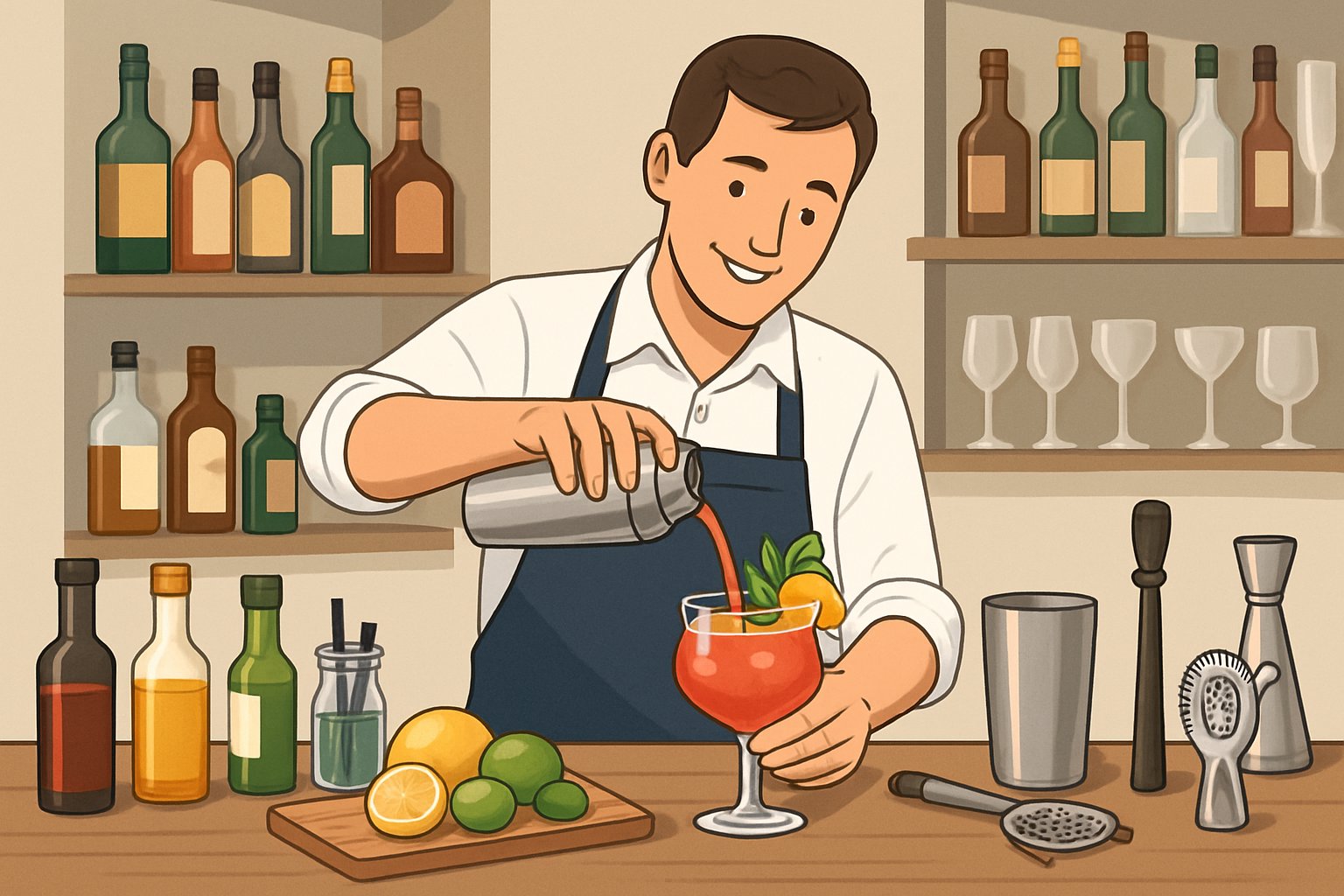
A well-designed bar blends function and comfort, letting you focus on mixing balanced drinks and enjoying the process. You’ll need reliable tools, a thoughtful mix of spirits and mixers, and options for both alcoholic and nonalcoholic service that work for different guests and occasions.
Essential Bar Tools and Glassware
Start with a few key tools before buying extra gear. A cocktail shaker, mixing glass, jigger, and bar spoon cover most drinks. Add a muddler for herbs and fruit, a strainer, a fine mesh sieve, and a citrus juicer. These basics will help you create classics like an Old Fashioned or a Mojito.
Keep your bar organized with labeled drawers or trays for tools. Store glassware near your prep space so service feels smooth. Your home bar doesn’t need every style, but a few versatile types help a lot:
| Glass Type | Best For |
|---|---|
| Rocks glass | Whiskey, lowball cocktails |
| Highball glass | Gin and tonic, vodka soda |
| Coupe or Martini glass | Shaken or stirred cocktails |
| Wine glass | White wine, sparkling wine, prosecco, or champagne |
For more detailed equipment guidance, see this beginner’s guide to setting up a bar at home.
Stocking Spirits, Mixers, and Garnishes
Choose spirits that fit your favorite cocktails. Vodka, gin, rum, tequila, and whiskey create hundreds of options. Add a few liqueurs like vermouth or triple sec for more recipes.
Balance your bar with mixers that bring texture and freshness. Keep tonic water, soda, ginger beer, and seltzer water chilled. A bottle of lemonade or even lavender lemonade offers variety for lighter drinks. Stock fruit for garnishes—lemons, limes, and oranges are essential. Add herbs like mint or basil for aroma and color.
Use open shelving or tiered racks so bottles stay visible and easy to reach. If you want inspiration for balancing cost and quality, you can look at this complete guide to building a beginner’s home bar.
Batching and Mocktails
Batching helps when you host. Mix large quantities of one bar drink—for example, sangria, margaritas, or big-batch cocktails—before guests arrive. Store the mixture in sealed pitchers and chill until service. This reduces stress and lets you focus on talking and filming those first toasts.
Create mocktails with balance, not just juice. Use soda or seltzer water for texture and acids like citrus for freshness. Try combining lavender lemonade with a splash of tonic or adding sparkling water to muddled berries.
For parties where guests serve themselves, self-service setups work well. Arrange labeled carafes of mixers and pre-cut fruit so everyone feels included. More ideas for DIY presentation come from this how-to on self-service cocktail bars.
Frequently Asked Questions
Understanding how to plan your bar setup and create your own signature drinks helps your event feel more personal and polished. By learning basic cocktail ratios, essential bar tools, and creative menu design, you can craft drinks that reflect your taste while remaining easy for guests to enjoy.
How can I create a unique signature cocktail for my event?
Start by choosing a base spirit you enjoy such as vodka, rum, or gin. Build around it with complementary mixers, syrups, and garnishes. Focus on balance—sweet, sour, and bitter flavors should work harmoniously.
If you want inspiration, explore how to create your own signature cocktail. That guide describes how to narrow your ingredients and find unique combinations that match your palate and your event’s style.
What are some classic cocktail ratios to know when making a drink?
A simple rule for balance is the 2:1:1 ratio—two parts spirit, one part sour, one part sweet. It works for drinks like daiquiris and margaritas. For spirit-forward cocktails, use a 4:1 ratio of base to modifier, similar to a martini or Manhattan.
Test small variations to match your preference. Slightly more citrus or syrup can make the same drink feel completely different.
What essentials should I include in my basic bar setup?
You’ll need a shaker, strainer, jigger, muddler, and bar spoon. These tools make mixing smooth and consistent. You can read a short breakdown of these tools in this guide on essential tools for making a signature cocktail.
Stock your bar with a few quality spirits, basic mixers like soda water and tonic, citrus juices, and ice. Keep napkins, small snacks, and garnishes nearby to make service effortless.
How can I craft a cocktail menu that complements my event's theme?
Think of your theme’s mood, colors, and season. Choose drinks that fit those details—light spritzes for summer, warm spiced options for winter. Limit your menu to 2–3 options to speed service and reduce waste.
If you run a bar or venue, creating a cocktail menu that matches your concept can help your offerings feel cohesive. Matching flavor profiles and presentation to your event aesthetic creates a stronger guest experience.
Can I design my own cocktail without professional bartending experience?
Yes. Start small. Stick to familiar ingredients and adjust flavors bit by bit. Use standard recipes as a guide until you learn what you like. Taste and tweak as you go.
Many home bartenders craft crowd favorites by paying attention to flavor balance and presentation rather than complexity. Experiment responsibly and stay consistent with measuring tools for repeat results.
What are some popular ingredients that can elevate homemade sodas for my bar?
Add simple syrups made with herbs, ginger, or fruits for bold flavor. Fresh citrus juice brings sparkle and freshness. You can also use a hint of bitters or natural extracts for depth.
For larger events, mix these syrups in advance so guests can pour over soda water for a quick and colorful nonalcoholic drink. Well-chosen garnishes—mint, lime slices, or berries—make each glass look inviting.