What To Do The Week Before The Wedding

You’re in the home stretch—the week before your wedding. Excitement fills every moment, yet tiny details seem to multiply with each passing hour. You might feel torn between soaking up the magic and managing a growing to-do list. It’s normal. As someone who’s filmed hundreds of weddings, I’ve seen couples move from stress to calm once they realized how much clarity comes from focusing on the right things. The soft morning light spilling across your bridal suite, the hum of excitement before your first look—this week is about preparing for those moments with intention, not perfection.
This guide shows you exactly what to do the week before your wedding so you feel calm, organized, and ready to enjoy every second of your day. You’ll find practical checklists drawn from real experiences—like confirming vendors, finalizing attire, and getting your space guest-ready. Resources such as the week-before wedding checklist from Brides and the final countdown timeline shared by One Fab Day emphasize the same goal: simplify decisions and protect your peace of mind.
You’ll also find gentle reminders to rest, breathe, and stay connected to what truly matters. In the next sections, you’ll explore essential planning tasks, thoughtful personal preparation, final guest details, and self-care tips to steady your mindset. By the time your wedding week arrives, you’ll have both a solid plan and the calm confidence to live every moment fully.
Essential Final Week Planning Tasks
Pay close attention to logistics in the final week. Confirm details, payments, and timing to keep your schedule smooth. Secure every document needed for the ceremony so you can focus on celebrating.
Confirm Wedding Vendors and Final Payments
Check that all wedding vendors know their schedule, location, and contact information. Call or email each vendor—the caterer, photographer, florist, and DJ—to verify delivery times and setup instructions. Track confirmations in your wedding checklist so you can see what’s complete and what still needs attention.
Use this time to handle any final payments. Many vendors require balances to be paid before the event. Keep receipts and digital transactions in one shared folder. It’s smart to confirm gratuities or tips for on-site staff as part of this review.
If you have a venue coordinator, share your contact list and planned arrival times. They can help direct vendors on the wedding day and solve any minor timing issues quickly. A web-based checklist like the one from One Fab Day keeps these items organized and easy to update.
Review and Finalize Wedding-Day Timeline
Create one clear wedding-day timeline and share it with everyone involved—your planner, vendors, and wedding party. Include start times for hair and makeup, first look, ceremony, and reception details. A solid schedule ensures that moments flow naturally without rushed transitions.
Review this plan with your wedding planner, officiant, and photographer to confirm timing accuracy. Add buffer time between events to account for setup changes or transportation. Update your week-of wedding checklist if anything shifts, then send the final version to your team.
I learned this the hard way filming a mountain wedding where the bride forgot to alert the florist of a ceremony time change. The flowers arrived an hour late, leaving her bouquet missing in every pre-ceremony shot. After that, I started reminding every couple to share their timelines with all vendors. That small step prevents so much stress.
Coordinate Last-Minute Details With Your Planner or Coordinator
Stay in close contact with your wedding planner or venue coordinator during the final days. Go over final headcounts, meal preferences, décor layout, transportation routes, and seating changes. These details may seem small but affect how smoothly everything runs.
Make a communication plan for the wedding day. Decide who handles vendor questions, guest concerns, or weather adjustments. If you don’t have a planner, choose a reliable friend or family member for this role so you can stay present and relaxed.
This reminds me of one backyard wedding where rain moved in unexpectedly. The planner calmly revised the tent setup while the couple stayed dry and stress-free getting ready indoors. Because they had delegated trust early, the day still ran beautifully, and the film looked effortless.
Gather Necessary Documents and Licenses
Locate all legal and ceremonial paperwork several days before the wedding. Keep your marriage license, ID cards, permit forms, and vendor contracts in a clearly labeled folder or small binder. Bring hard and digital copies in case one gets misplaced.
Confirm that your officiant has everything needed to file the marriage certificate with your county or state. Some areas require signatures from witnesses or an additional form before the ceremony. Review those steps early to avoid last-minute confusion.
Cross-check your list with a reliable week-of wedding to-do list for assurance you haven’t missed anything. Having documents ready gives you peace of mind knowing every legal detail is in place before you say your vows.
Personal Preparation and Wedding Attire
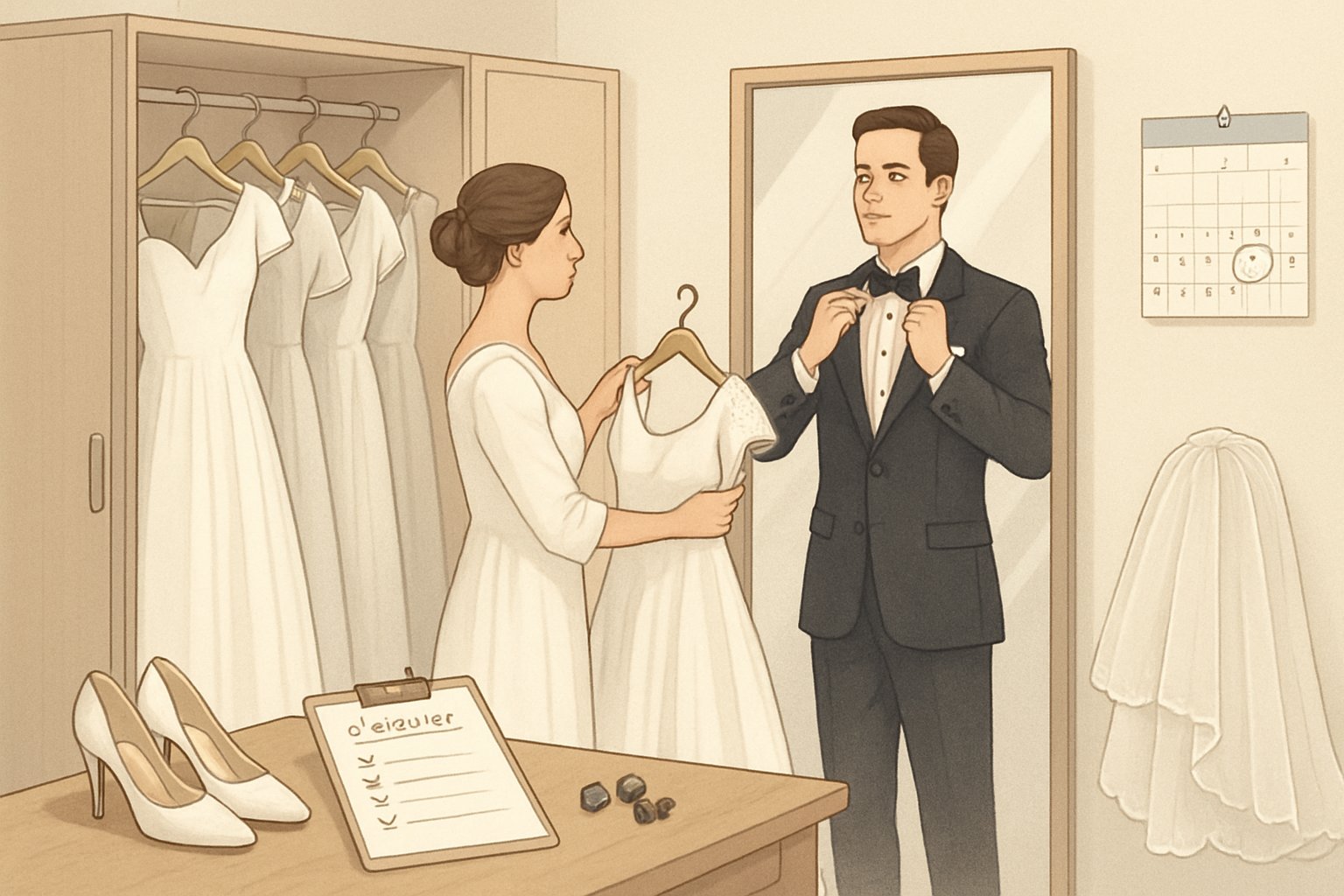
Your appearance and comfort on the wedding day depend on good preparation. The right fit, well-worn shoes, and an organized kit of essentials keep stress low and confidence high from ceremony through reception.
Try On and Prepare Wedding Day Attire
Try on your wedding dress or wedding attire in full, from outerwear to undergarments. Move around, sit, raise your arms, and dance. Check for comfort, secure fastenings, and fabric that breathes. Make small alterations now rather than waiting until the last minute. If possible, have a friend or family member who will help you dress observe how each piece fits and fastens.
Hang your outfit on a padded hanger in a dry, cool place. Use a garment bag for protection. Iron or steam wrinkles a few days before rather than on the morning of the wedding. If you plan to wear a veil, hairpiece, or shawl, confirm how each attaches.
For suits or tuxedos, confirm that tailoring feels right at the shoulders and cuffs. Try the full look with your shoes and accessories. Many couples check off this step a week ahead following onefabday.com’s 7-day wedding checklist to make sure everything fits properly before the rush begins.
Break In Wedding Shoes and Accessories
Unworn shoes can cause blisters or pain. Break in your wedding shoes by walking indoors for short periods each day. Wear them on carpet or clean floors to avoid scuffing. If the heels or soles feel stiff, try flexing them gently by hand or using shoe stretchers. Add padded inserts if they give you better support.
You can create a short checklist:
| Task | Time Needed | Notes |
|---|---|---|
| Wear shoes around house | 15–30 minutes daily | Add socks if tight |
| Test walking on different floors | 5–10 minutes | Check for grip |
| Pack backup flats or sandals | N/A | Keep near dance area |
If you wear new jewelry or accessories, practice attaching clasps and checking their weight. You should also store your accessories in labeled cases so they’re easy to find on the day. According to weddingsfromtheheartblog.net’s week-before wedding checklist, comfort testing now helps avoid major wardrobe issues later.
Organize Emergency Kit and Day-Of Essentials
Create a wedding day emergency kit that keeps small problems from turning into distractions. Pack items such as safety pins, double-sided tape, a small sewing kit, deodorant, blotting sheets, bandages, and stain remover. Include pain relievers, tissues, and mints. Add a phone charger and a list of vendor contacts.
Keep this kit with your wedding coordinator or a trusted friend. Store it in a labeled pouch or small box that’s easy to find in a bag or under the preparation chair. Use travel-size items to save space.
As theknot.com’s wedding week planning guide explains, being prepared helps you stay calm and focused on celebrating. Good preparation ensures you handle the unexpected fast, whether it’s a missing button or a smudge on your gown.
Final Guest and Event Details
Accuracy and communication define the success of your last week of wedding planning. Confirm who is attending, lock in seating details, and make sure every participant—from guests to the wedding party—knows where they need to be and when. These steps create order, reduce stress, and ensure everyone enjoys the celebration.
Update and Confirm Final Guest Count
Start by finalizing your guest count with your venue and caterer. Most caterers require confirmation about five to seven days before the wedding to adjust meal and beverage orders. Include vendors who need headcounts, such as bakers, bartenders, and rental companies.
It helps to track RSVPs in a simple table or shared document:
| Category | Number | Notes |
|---|---|---|
| Confirmed Guests | 128 | Includes 4 children |
| Declined | 27 | Update seating chart |
| No Response | 3 | Follow up individually |
Once verified, email the final count to vendors and request acknowledgment. This prevents confusion and ensures everyone prepares for the right number of guests. If any guests cancel last-minute, inform your venue as soon as possible.
Finalize Seating Chart and Place Cards
A well-thought-out seating chart promotes conversation and minimizes awkwardness. Group guests by shared interests, family ties, or age range. Couples and families should sit together unless space limitations require adjustments.
Double-check accessibility for elderly guests and clear paths for waitstaff. Tools like digital layout planners can simplify the process.
To illustrate this, here’s a moment that taught me the importance of preparation.
At one wedding, I captured the bride realizing 15 minutes before dinner that two tables lacked place cards. Staff scrambled while guests milled around awkwardly. The best man and maid of honor hurried to write temporary cards. The dinner ran smoothly afterward, but the tension was unforgettable. Since then, I’ve seen how reviewing your layout twice—once on paper and once in person—avoids those small but stressful moments.
Labeling each chair with a clear, legible place card helps guests find their seats quickly. Keep them consistent in style and easy to read.
Prepare and Alphabetize Escort and Table Cards
Organize escort cards alphabetically by last name on a table near the reception entrance. This speeds up guest check-in and reduces crowding. Table cards should then guide guests to their assigned tables, where place cards show their exact seats.
If you’re using a display—like a framed chart or hanging tags—double-check spellings. Bring extra blank cards and pens for any last-minute additions. Assign a bridesmaid or usher to oversee this area so you can focus on more important moments.
I learned this the hard way filming a summer wedding outdoors. A gust of wind scattered half the escort cards minutes before guests arrived. The maid of honor and groomsmen raced to sort them as I filmed the chaos. Once fixed, the bride laughed in relief. That scene reminded me to tell couples: secure your setup with clips or boards if you’re outdoors. Small precautions save big headaches.
Communicate Schedule to Wedding Party and Family
Finally, make sure your wedding party and family members all know the timeline. Send a clear schedule listing arrival times, photo sessions, transportation details, and ceremony cues. Include contact numbers for the planner, maid of honor, and best man.
Hold a brief meeting or group chat the week before to confirm everyone’s roles—from ushers helping with guests to bridesmaids handling last-minute emergencies.
You can create a simple chart like this:
| Role | Responsibility | Key Time |
|---|---|---|
| Best Man | Keep rings, manage groomsmen | 3:45 PM |
| Maid of Honor | Hold bouquet, assist bride | 4:00 PM |
| Ushers | Seat guests | 3:15 PM |
| Parents | Enter before processional | 4:10 PM |
Clear communication reduces mistakes and saves time. As explained in the week-before wedding checklist, confirming all final details with your team creates a seamless flow on the big day.
Wedding Week Self-Care and Mindset
Taking care of your body and mind the week before your wedding helps you feel calm, confident, and ready for the celebration. Balance beauty prep, quiet breaks, and organized packing so you can walk into the big day feeling rested, radiant, and in control.
Plan and Attend Beauty Appointments
Organize your hair and makeup trial early in the week if you haven't done so already. This timing gives you space to adjust any styles or products before the wedding day. Book final touches like a manicure and pedicure, especially a mani-pedi in a light or neutral shade that complements your outfit and lasts through the weekend.
Many couples also add facials or waxing at least three to five days before the ceremony to avoid irritation. If you’re getting a spray tan, schedule it two days before so the color settles naturally.
Create a simple chart to stay on schedule:
| Appointment | Ideal Timing | Notes |
|---|---|---|
| Hair & Makeup | 5–7 days before | Include trial if needed |
| Mani-Pedi | 2–3 days before | Choose chip-resistant polish |
| Spray Tan | 2 days before | Shower after full development |
| Waxing/Facial | 3–5 days before | Avoid trying new products |
This reminds me of one wedding where I filmed a bride who booked her spray tan the night before. By morning, the color streaked on her gown. She laughed it off, but it taught me how small timing choices matter. You’ll feel more relaxed knowing beauty tasks are done ahead.
Schedule Relaxation and Emotional Wellness
Schedule time for calm and rest. A light massage, evening walk, or quiet journaling session releases built-up tension. Each activity helps you reset and stay grounded when excitement peaks.
Use short relaxation techniques such as:
- 10-minute breathing exercises
- Listening to soft instrumental music
- Disconnecting from your phone for an hour
- Sharing a low-key dinner with close friends
If you enjoy guided meditation, use it before bed to improve sleep quality. Some couples even book a couples massage together as part of their wedding beauty and wellness routine.
I learned this the hard way filming a wedding in August heat where the bride didn’t take downtime all week. By the ceremony, she looked beautiful but exhausted. Afterward, she told me, “I should’ve said no to one more lunch plan.” Remember, rest is part of preparation.
Pack for the Wedding Day and Honeymoon
Start by preparing two separate bags: one for the wedding day and another for the honeymoon, as recommended in organization guides like this checklist.
Include these essentials in your day bag:
- Touch-up kit (lipstick, tissue, safety pins)
- Extra pair of shoes
- Printed copies of travel documents
- Vendor contact list and schedule
Pack your honeymoon bag early so you don’t rush after the celebration. Check passports, IDs, and flight details to avoid last-minute stress. Keep valuables and important papers in your carry-on or secure folder.
I once filmed a couple leaving for their honeymoon the morning after. The groom forgot his passport at home an hour away. Watching them wait at the airport taught me that packing ahead saves more than time—it protects your peace of mind.
Assign Roles for Ceremony Rehearsal and Gift Management
Use the ceremony rehearsal to clarify roles for attendants and family members. Practice the order of processional and timing with your officiant, and review small details before moving to your rehearsal dinner. Bring a clear list of tasks—who holds the rings, manages transportation, and cues the music.
For wedding gifts, designate a trusted person to collect and store them safely after the event. Prepare labeled boxes or bags for cards, decor items, and keepsakes.
You can reference practical coordination tips from The Knot’s week-of wedding checklist, which stresses communication with vendors and helpers.
Avoid feeling like you have to manage everything yourself. A short conversation now can prevent confusion later. If others know their responsibilities in advance, you’ll have more time to enjoy the small, meaningful moments.
Frequently Asked Questions
Final wedding prep covers beauty routines, last-minute tasks, eating habits, mental focus, and detail checks. Staying organized helps you keep calm and ready for the celebration ahead.
How can I best prepare for my beauty regimen the week before my wedding?
Schedule all beauty services early in the week. Get your hair trimmed, eyebrows shaped, and nails done no later than two or three days before the event. For facials or treatments, plan them at least five days out to reduce the risk of skin irritation.
Drink plenty of water and stick to your regular skin care routine. Avoid trying new products late in the process. A balanced routine keeps your skin smooth and glowing naturally.
What final tasks should be included in my wedding checklist two weeks out?
Two weeks before your wedding, confirm details with vendors such as the caterer, florist, and photographer. Send your final timeline to everyone involved and verify transportation arrangements and meal counts. Many planners advise that you confirm with all vendors during this time to prevent day-of surprises.
Prepare your marriage license, wedding-day attire, and any décor items you’re handling personally. Gather all these items in one place so nothing gets misplaced during travel or setup.
What dietary considerations should I be mindful of one week before the wedding?
Eat balanced meals and avoid foods that cause bloating or discomfort. Focus on lean proteins, vegetables, and whole grains. Reduce alcohol, sodium, and processed sugars to maintain energy and keep your skin clear.
Stay hydrated and maintain consistent meal times. Do not skip eating due to nerves or stress—steady nutrition supports stamina for the long wedding day.
How should I mentally prepare myself in the days leading up to my wedding?
Take short breaks from planning and delegate small tasks. Try breathing exercises, journaling, or light physical activity to lower tension. Setting aside quiet time helps you focus on what truly matters.
Spend a few moments daily connecting with your partner about how you both feel. Doing so keeps your focus on each other and not just the logistics.
To illustrate this, here's a moment that taught me the value of staying mentally centered. I once filmed a couple whose ceremony rehearsal ran late, leaving the bride exhausted. As I packed up, I noticed her pause, take a deep breath, and tell her fiancé she just wanted five quiet minutes together before heading home. That small reset changed her mood completely. The next day, she told me that those minutes grounded her for the rest of the week. That simple act reminded me that pausing can do more than hours of planning ever could.
What are the essential last-minute details to check the day before my wedding?
Lay out your dress, accessories, and shoes the night before. Pack an emergency kit with items like tissues, safety pins, blotting papers, and energy snacks. Confirm arrival times with your wedding party and review the day-before checklist to ensure no detail slips through.
If possible, visit the venue briefly to see the setup in progress and verify decor placement. This helps you feel confident that everything matches your vision.
Can you provide motivational advice for the final week leading up to the wedding?
Focus on gratitude and connection. Remind yourself why you planned this celebration—to honor your love and commitment. Trust your team and let go of perfectionism.
I learned this the hard way filming a wedding where a sudden storm forced the ceremony indoors. The couple looked disappointed as their outdoor setup got drenched. But once they started reading their vows under candlelight, everyone forgot the rain. Their joy filled the room, and by the end, the downpour felt like part of the story. That moment showed me that a wedding’s beauty comes from emotion, not flawless plans.