The Real Story Arc Of A Wedding Day

You might be feeling a mix of joy and stress right now—the excitement of seeing your vision come together and the “where do I even start?” moments that sneak in between emails and timelines. I get it. I’ve filmed hundreds of weddings, and I’ve seen it all—from soft morning light spilling across the bridal suite to last-minute rain that turns into laughter under umbrellas. Through it all, the real story of a wedding day always unfolds differently than planned, yet somehow perfectly.
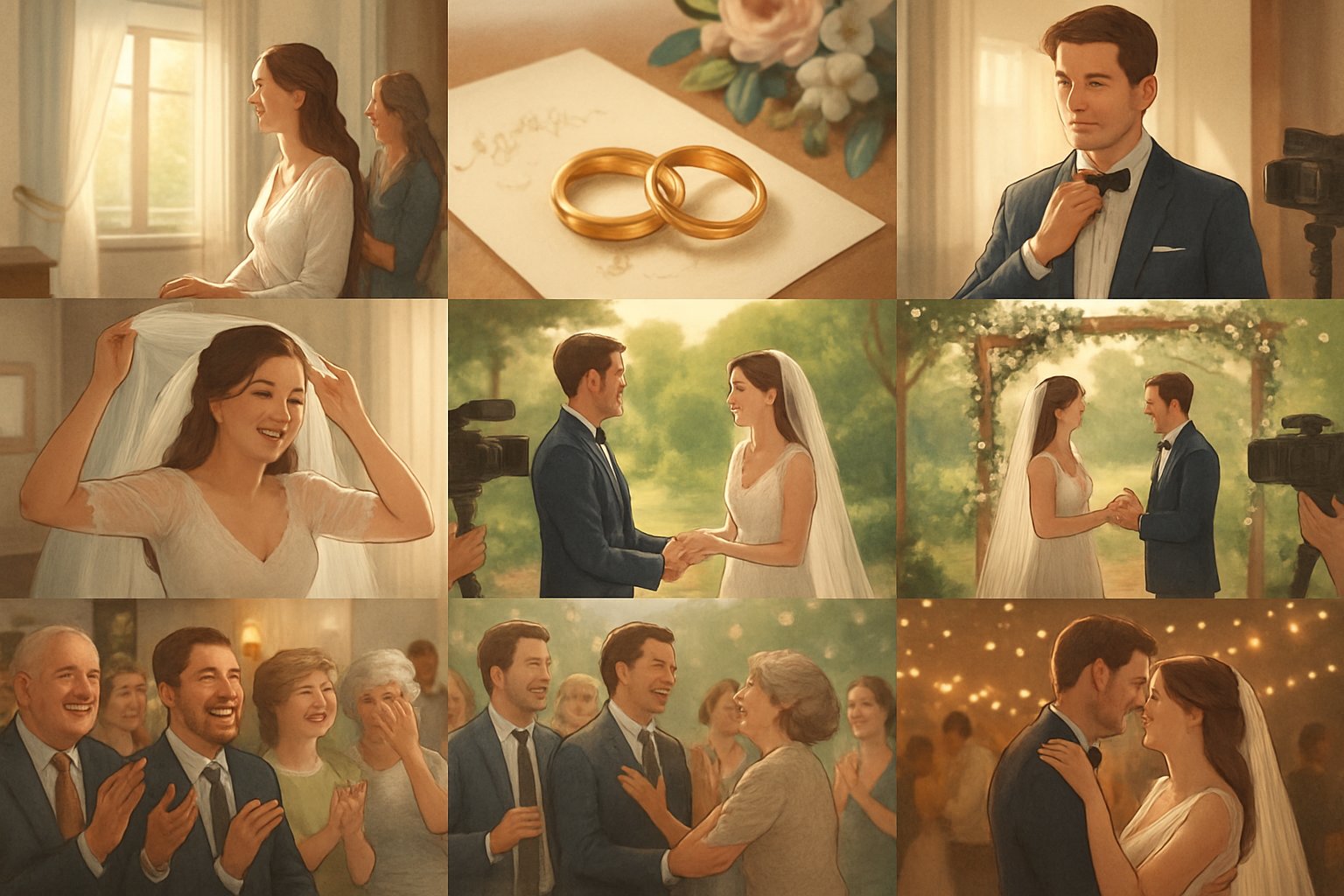
The real story arc of a wedding day isn’t scripted—it’s discovered. Every wedding has a natural rhythm that no shot list can predict: the quiet anticipation before the first look, the chaos of getting ready, the calm exhale before the vows. When you start to see your day as a story, not just a schedule, the details and emotions align with new meaning.
This guide will ease your mind and sharpen your vision. You’ll explore how a cinematographer captures the story arc that makes each wedding film authentic and timeless. By the end, you’ll know how to preserve your memories with purpose and let your day unfold with calm confidence.
Capturing the Real Story Arc: A Videographer’s Narrative Approach
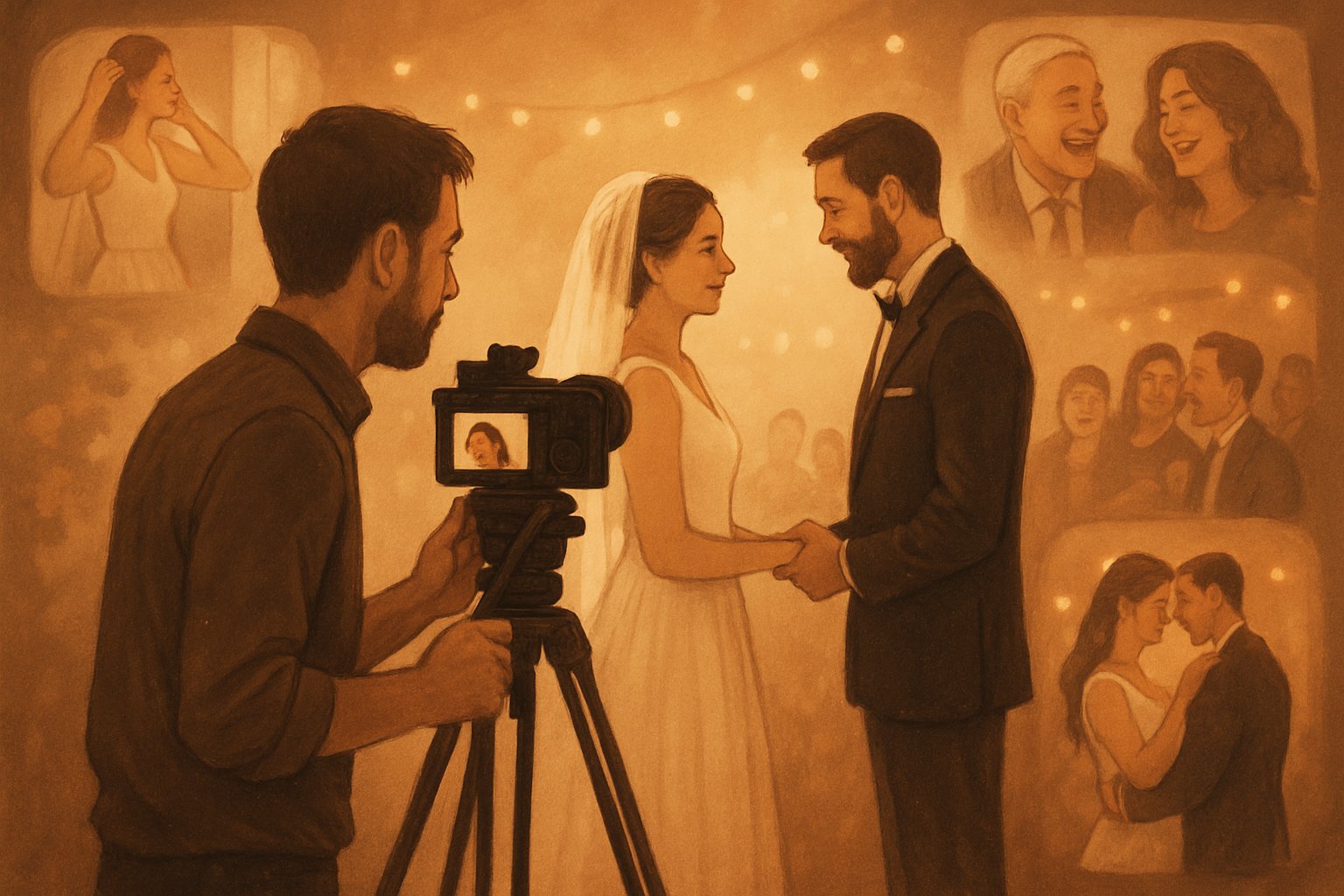
A wedding film should feel natural, not staged. The story gains strength through timing, emotion, and the mix of quiet and lively moments that define the day. When you capture small transitions and genuine reactions, you create a complete narrative that feels personal and timeless.
Understanding the Flow of a Wedding Day
You can’t shape a story you don’t understand. Each wedding follows a rhythm—preparations, ceremony, celebration, and farewell—but energy levels and emotion shift constantly. Watching how people move between these stages helps you predict scenes instead of reacting to them.
Start the day by identifying who drives the story. It might be the couple, a parent, or a close friend. Knowing this guides your focus and editing later.
Keep notes about time, light, and movement. Simple details like how morning light enters the dressing room or how guests fill the reception space give you natural transitions between scenes.
When the schedule runs late or emotions peak unexpectedly, stay steady. A calm tone helps others stay grounded while you document it all.
Key Emotional Beats and Transitions
Strong storytelling depends on emotional pacing. You should know when to lean in and when to step back. Important transitions—like the moment a parent sees the couple dressed, or the silence right before vows—carry the most tension and meaning.
Plan camera placement before these moments, but let emotion lead your timing. Early reactions, unspoken gestures, and short pauses often say more than speeches.
Collecting these subtle beats helps viewers feel the emotional journey rather than just watch events.
To illustrate this, here’s a moment that taught me how small shifts shape the story.
At one wedding, the groom’s mic failed right before his vows. Panic spread, but instead of stopping, he spoke louder. The guests leaned in, and his voice trembled but carried. The failure turned intimate. In editing, that scene became the most emotional part of the film. I learned that imperfections often reveal the truth of the day better than planned perfection.
Blending Candid Moments with Planned Shots
Balancing direction and observation keeps a wedding film authentic. You need posed shots for structure, but candid footage gives life. Think of it as weaving both threads to keep the pace dynamic and true.
Use a simple approach:
- Guide lightly during portraits or group scenes.
- Step back when moments unfold naturally.
- Watch for cues like laughter, glances, or hands reaching out.
Lighting, positioning, and focal length all matter, but your awareness matters more. Be ready for quick changes—wind gusts, a tear, an unexpected dance. Those unplanned fragments often define the real story.
I learned this the hard way filming an outdoor wedding where a storm rolled in. We’d set up a perfect shot of the couple under the arch when rain started. Everyone rushed for shelter. I kept recording as they huddled under umbrellas, laughing. That footage, wet hair and all, became the heart of the film. It reminded me that honest emotion outlasts perfect conditions.
Essential Phases of the Wedding Day
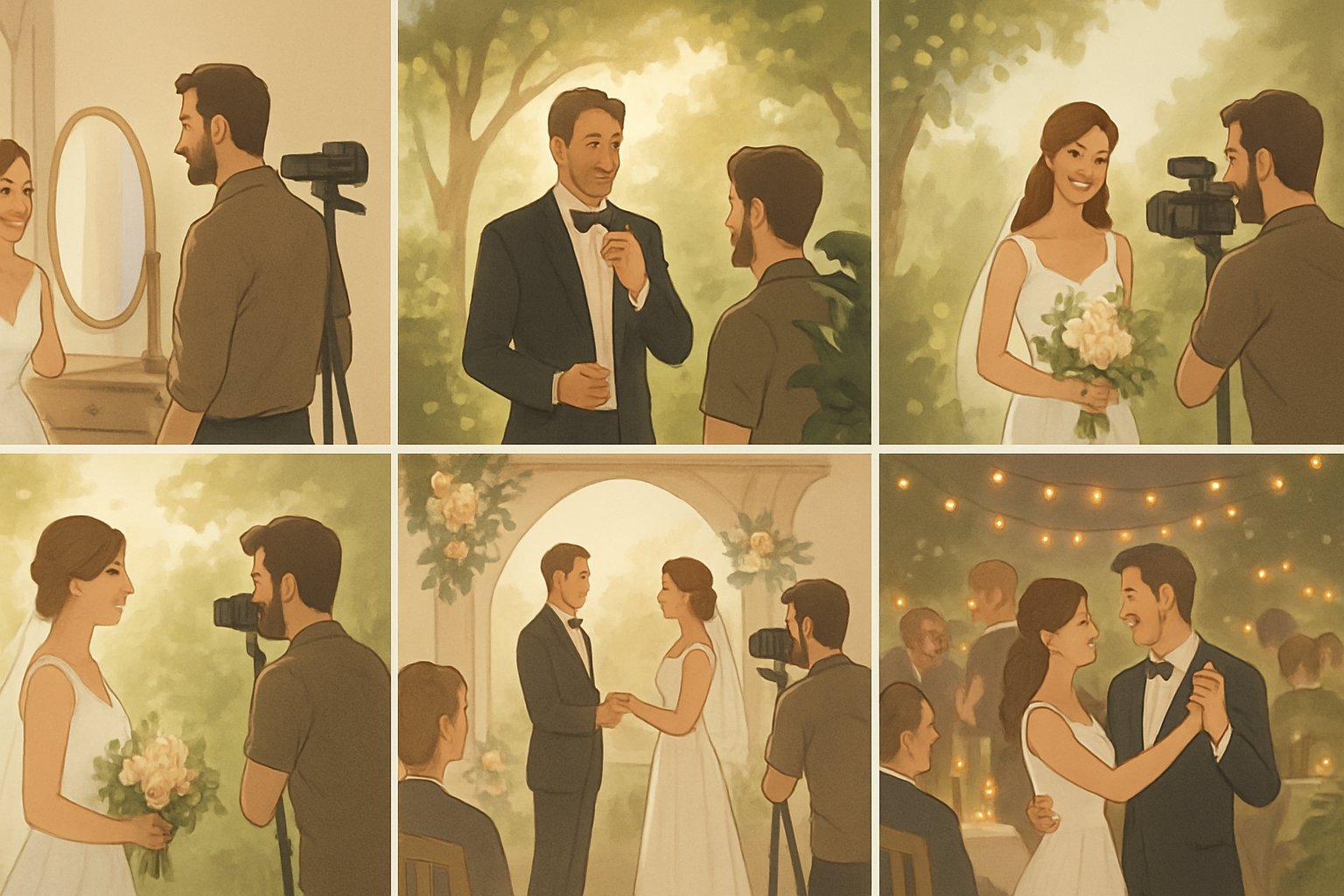
Each wedding follows a natural rhythm built around preparation, ceremony, and celebration. These moments shape the emotional flow of the film and give every story a distinct beginning, middle, and end.
Pre-Ceremony Anticipation and Preparations
The hours before the ceremony set the emotional tone for the day. You capture the quiet energy as people get ready, from makeup brushes moving quickly to ties being adjusted. The lighting and atmosphere often shift from calm to focused, giving you chances to record subtle details that reveal character and mood.
Use this time to film personal touches, such as handwritten letters, gifts exchanged between partners, or parents offering support. These moments create context for later scenes and help balance emotional pacing in the edit.
This reminds me of one wedding where the groom’s best man misplaced the handwritten vows just minutes before the ceremony. Panic built across the room while I quietly filmed the search. When the letter finally turned up inside a jacket pocket, everyone laughed and relaxed. The footage of that laughter ended up showing more about their friendship than any planned shot. It reminded me to keep recording through transitions because genuine reactions often happen then.
Ceremony Highlights
During the ceremony, your focus shifts to capturing the exchange of vows and symbolic gestures. Work with consistent framing and clear audio to preserve emotion without distraction. The body language between the couple often reveals deeper feelings than the words alone.
It helps to map out where to stand before guests arrive. Coordinate with the officiant to avoid obstructing views and plan for quiet movement between key shots. Record cutaway angles like guests reacting, hands tightly held, or tears forming; these visuals carry emotional weight during editing.
I learned this the hard way filming an outdoor wedding where sudden wind hit right before the vows. My mic picked up heavy noise, and I had to switch to a backup recorder mid-ceremony. That moment reinforced how fragile ceremony recordings can be and why redundant audio setups matter as much as camera placement.
Reception and Final Celebrations
After the ceremony, the pace relaxes and the lighting becomes more dynamic. You focus on documenting energy, laughter, and movement. Key events like speeches, the first dance, and the cake cutting anchor this part of the story.
Use a mix of wide shots for atmosphere and close-ups for emotion. Steady rhythm and good timing matter here—too much crowd footage can feel repetitive, while missing a candid moment can break narrative flow.
To illustrate this, here’s a moment that taught me timing matters more than control. At one reception, the lights dimmed unexpectedly during the first dance. Instead of rushing to fix exposure, I stayed wide and let the soft glow from candles shape the scene. The couple didn’t notice the lighting change, but in editing, that darkness made the dance feel intimate and cinematic. It reminded me that sometimes the unexpected light tells the truest version of a story.
Techniques for Conveying Authentic Emotion
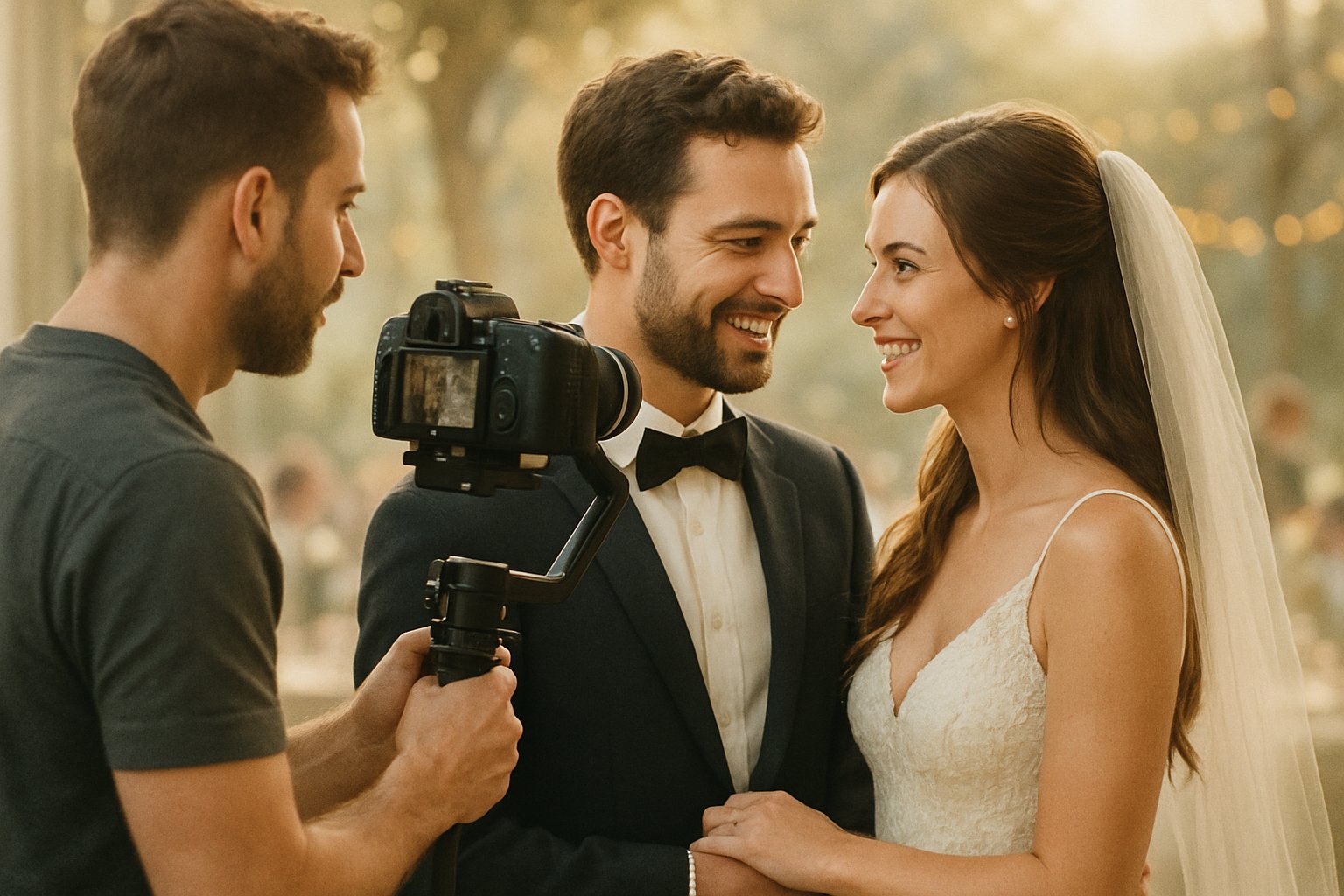
Capturing genuine emotion on a wedding day depends on how you structure your edit, design the sound, and choose your visuals. Each contributes to how viewers connect with the couple’s story and feel what they felt in the moment.
Story-driven Editing Methods
Edit with purpose by arranging clips around emotional beats instead of following the timeline of events. Structure your footage to mirror how the day felt, not just what happened first. Start with quieter moments—like a parent’s nervous hands or an exchanged glance—and build toward high-energy scenes such as the ceremony or first dance.
Tips for emotional pacing:
- Use reaction shots generously, showing laughter, tears, or shy smiles.
- Match cuts based on emotion or movement, not just location.
- Let key pauses breathe instead of trimming everything tight.
I learned this the hard way filming a beachfront wedding. The groom froze during his vows, laughing nervously. I almost cut that silence out, thinking it ruined the rhythm. When I played it back later, his pause made the vows feel raw and truthful. Keeping that imperfection turned a simple clip into the emotional centerpiece of their film.
Sound Design and Music Choices
Sound sets the tone before a single image appears. Choose tracks that support mood rather than overpower it. Layer in ambient sounds—footsteps on gravel, wind through trees, or soft chatter—to anchor viewers in the moment.
Work with three key layers:
- Natural audio: dialogue, laughter, ambient noise.
- Music: subtle, melodic, emotionally fitting.
- Sound effects: used sparingly for emphasis, not decoration.
At one mountain wedding, wind gusts nearly ruined the audio. I recorded backup ambient sound the next morning in the same spot. The replacement tracks restored the scene’s calm feeling without faking it. Natural sound carried more emotion than any song could.
Cinematic Sequences and Visual Storytelling
Think of each visual sequence as a story within the story. Use close-ups for intimacy, wide shots for environment, and smooth movement to reflect tone. During emotional scenes, stabilize the camera and slow your pace, allowing viewers to linger on expressions.
Focus on contrasts—bright daylight versus candlelight, laughter versus quiet reflection—to convey emotional shifts clearly.
This reminds me of a winter wedding where a snowstorm delayed the ceremony. I filmed the couple wrapping blankets around each other while guests moved chairs inside. What began as frustration turned into warmth and closeness. Those unexpected moments told their love story better than anything planned.
Frequently Asked Questions
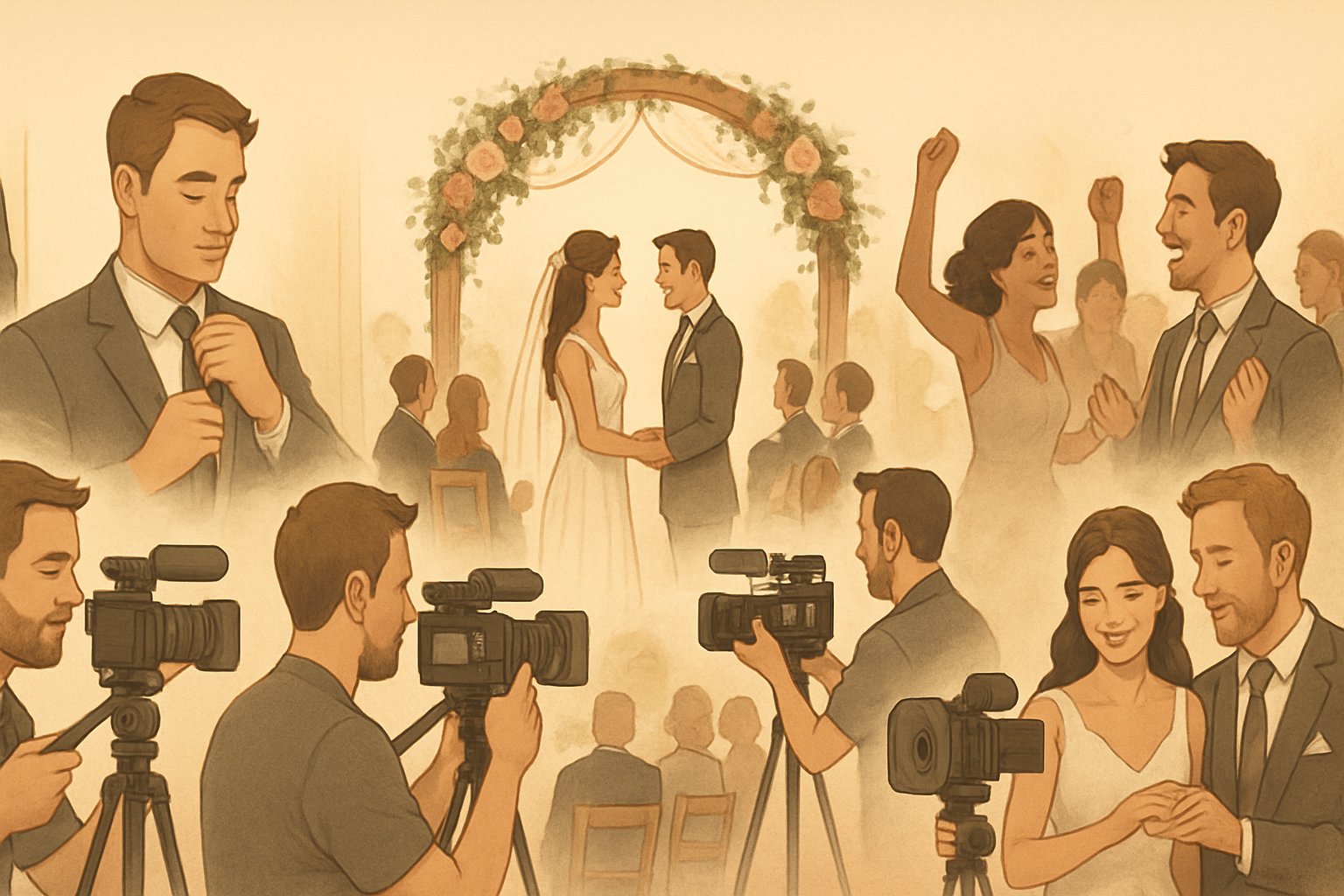
Wedding videography combines planning, observation, and storytelling to create a cohesive record of the day. It involves capturing emotional details, managing real-time challenges, using visual techniques that guide the viewer through the story, and working within clear timelines.
What essential moments should be included in a wedding day video?
A strong wedding film highlights key transitions of the day. These usually include getting ready, the ceremony, vows, first look, reception entrances, speeches, first dances, and guest interactions.
You also want to include ambient details—decorations, venue scenes, and small gestures—that set the tone and context. Filming natural reactions often makes the story feel genuine.
How does a videographer capture the emotional narrative of a wedding?
You capture emotion by paying attention to facial expressions, body language, and tone. Subtle framing, pacing, and audio cues help translate those moments into a story viewers can feel.
To illustrate this, here’s a moment that taught me how powerful observation can be.
At one outdoor wedding, the father of the bride kept glancing at her bouquet. As I filmed, I realized he was tracing a charm tied to it—a photo of her late mother. During the vows, he quietly touched the charm again. That shot became the emotional thread of the film. It reminded me that catching feeling often means noticing the quiet, unscripted gestures that reveal love and memory.
What are common challenges in filming a wedding and how are they handled?
Lighting conditions, weather shifts, and tight schedules are frequent challenges. You handle these with preparation—carrying backup equipment, scouting locations, and maintaining steady communication with planners and vendors.
Technical flexibility matters too. Adjusting lenses or camera settings quickly allows you to adapt without missing key moments.
I learned this the hard way filming a mountain wedding that started under bright sun but turned foggy right before the ceremony. As light dropped, I had to swap lenses fast and shift white balance on instinct. The footage came out moody but true to the moment, and it reinforced that quick thinking is essential when nature changes your plan.
Can you describe the storytelling techniques used in wedding videography?
Videographers often build a story arc that mirrors the emotional flow of the day—anticipation, ceremony, celebration. They use visual continuity, pacing, and music to link these moods.
Voiceovers from vows or speeches connect the narrative. Using natural sound keeps scenes authentic and grounded.
How does a videographer collaborate with photographers and other vendors on the wedding day?
You coordinate timelines, share positioning, and work together to keep events running smoothly. Clear communication avoids blocking each other’s shots and ensures balanced coverage.
It helps to discuss creative goals beforehand so everyone understands how to complement one another’s work.
This reminds me of one wedding where the photographer and I planned a split-angle shot for the first look. She covered the bride’s expression while I framed the groom’s reaction. Later, syncing those moments in post showed both perspectives perfectly. Good teamwork often makes small moments feel larger and more connected.
What is the typical timeline for editing and delivering the final wedding video?
Editing often takes 8 to 12 weeks, depending on the project length and complexity. The process includes sorting footage, syncing audio, color correction, sound design, and final storytelling cuts.
Some videographers deliver a short highlight video first, followed by the full feature later. Clear expectations about delivery help maintain trust and excitement.